You’re My Dog. SVG
A Warm, Simple Statement — But Does It Stitch Well?
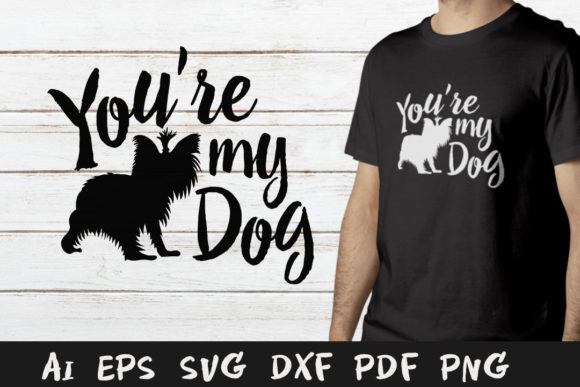
As someone who’s stitched hundreds of custom pieces—from boutique baby onesies to Etsy-ready embroidered patches—I opened You’re My Dog. SVG expecting charm, not complexity. And it delivers: clean lines, gentle curves, and a quiet sincerity in its layout. The phrase sits comfortably within a soft, rounded frame—no sharp angles, no aggressive kerning. It feels handmade, even before the needle touches fabric. That’s promising. But charm doesn’t guarantee stitchability—and for embroidery designers and small shop owners, that’s where the real evaluation begins.
First Impressions: Mood, Scale, and Embroidery Readiness
The design reads as affectionate, not cutesy. It avoids cartoonish exaggeration or overly stylized fonts—making it ideal for grown-up gifts (think: anniversary sweatshirts, minimalist kitchen towels, or nursery wall hangings). Visually, it’s compact but legible at 3–4 inches wide—a sweet spot for tote bag fronts, apron pockets, or pillow covers. There’s no intricate flourishes, no thin serifs, no overlapping letters. That’s good news: less risk of thread nesting, skipped stitches, or fuzzy edges on textured fabrics like terry cloth or fleece.
Real-World Use Case: A Custom Embroidered Tote for a Dog Lover’s Boutique
Last week, I prepped You’re My Dog. SVG for a local pet-themed boutique’s limited-run canvas totes. Their customers skew 30–55, value quality over flash, and often buy gifts “just because.” We chose a medium-weight natural canvas with light gray thread—soft contrast, high readability. On screen, the design looked balanced. In the hoop? Even better. The letterforms held their shape across three test runs: one with tear-away stabilizer (for crispness), one with cut-away (for durability), and one on a slightly stretchy cotton-linen blend (to stress-test stability). No puckering. No letter collapse. Just clean, confident stitching.
Where It Shines
- Custom apparel: Works beautifully on crewneck sweatshirts and relaxed-fit tees—especially when placed left-chest or centered on the back.
- Baby embroidery: Gentle scale and rounded forms suit onesies and burp cloths without overwhelming delicate fabric.
- Embroidered patch: Clean outer edge makes it easy to digitize for iron-on or sew-on backing—no jagged cut lines to clean up.
- Holiday embroidery: Paired with subtle red or forest green thread, it reads warmly—not kitschy—on tea towels or holiday stockings.
- Commercial embroidery: Low stitch density means faster run times and less thread waste—key for small-batch production.
Where to Proceed Thoughtfully
This isn’t a one-size-fits-all file. Its simplicity is a strength—but also a limitation in certain contexts:
- Small hoop sizes (under 3”): Letter spacing tightens visually; test at actual size before committing to caps or wristband-style patches.
- Textured or napped fabrics (like fleece or corduroy): The design’s smooth contours can blur slightly—add a light topping stabilizer to lift thread above the nap.
- Thin or sheer fabrics (chiffon, lightweight rayon): Avoid unless backed with strong cut-away; fill areas may show shadowing.
- Dark fabric + light thread: The “O” and “G” have enclosed counters—check that they don’t fill too densely and lose definition.
- Curved surfaces (caps, curved mugs): While the design itself isn’t curved, placement matters—center it on the front panel, not the crown, to avoid distortion.
What It Adds to Your Finished Product
You’re My Dog. SVG elevates perceived value without demanding premium time or materials. Customers recognize sincerity in simplicity—especially in handmade product spaces. On an Etsy listing, it reads as intentional, not generic. On a boutique shelf, it feels curated, not mass-produced. That translates directly to trust: buyers believe the item was made *for* them, not just *with* them in mind. For craft business owners, that’s gold—it reduces returns, increases repeat orders, and strengthens brand consistency across products (e.g., matching totes, tea towels, and baby blankets).
Practical Designer Notes Before You Stitch
- Test first: Run it on scrap fabric matching your final substrate—especially if using textured, dark, or stretchy material.
- Check thread color contrast: Try black, charcoal, navy, and cream on both light and dark backgrounds—some shades mute the warmth.
- Review stitch density: If digitizing from the SVG yourself, avoid overfilling the “o” and “g”—a light satin or open fill stitch preserves clarity.
- Confirm hoop size: Measure the design’s widest point in your embroidery software—don’t assume it fits a 4x4 without checking.
- Inspect small details: Zoom in on corners and junctions—SVG paths sometimes convert with tiny gaps or overlaps that cause stitch errors.
- Mock it up in black and white: This reveals contrast issues invisible on screen—critical for printable mockups or digital product previews.
- Use proper stabilizer: Light tear-away for stable wovens; cut-away for knits or anything that will be washed repeatedly.
- Verify licensing: Since this is a Graphics file marketed for commercial use (totes, mugs, apparel), confirm whether resale of finished embroidered items is permitted—this affects Etsy sellers and small shop owners directly.
Final Thought: A Quiet Workhorse, Not a Showstopper
You’re My Dog. SVG won’t stop traffic at a craft fair—but it will make someone pause, smile, and say, “That’s *exactly* how I feel.” That emotional resonance, paired with reliable stitch performance, makes it a quietly powerful asset in your Illustrations library. It’s not flashy. It doesn’t try to do everything. But for embroidery designers building thoughtful, scalable, customer-centered collections? It’s exactly the kind of steady, sincere, stitch-ready design that earns repeat clients—and keeps your machine humming.