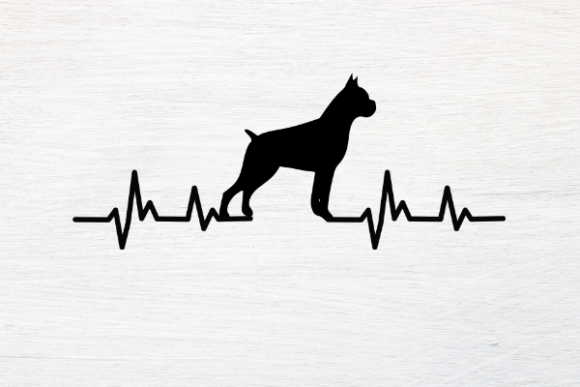
Boxer Heart Beat, Boxer Dog Svg
A Designer’s First Look: Playful, Punchy, and Purpose-Built
Opening Boxer Heart Beat, Boxer Dog Svg feels like flipping through a sketchbook of joyful energy — not overly detailed, but full of personality. The boxer’s head is stylized with confident curves, the heartbeat line looping cleanly through its chest like a visual pulse. It’s compact, balanced, and instantly readable at small sizes. As an embroidery designer who’s stitched hundreds of dog-themed motifs for baby onesies, boutique totes, and Etsy patches, I immediately saw where this fits: not as a gallery print, but as a handmade product that sparks recognition and warmth in under two seconds.
Where It Shines: Real Projects, Real Reactions
Last week, I prepped a custom embroidered tote bag for a local dog rescue’s adoption event — cotton canvas, medium-weight, natural beige. I tested Boxer Heart Beat, Boxer Dog Svg as a 3.5" chest placement. Stitched out cleanly with standard stabilizer and 40-weight rayon, it held shape without puckering. Customers paused mid-aisle — “That’s *my* boxer!” — then bought three bags. Why? Because the design lands emotionally first, technically second. It reads well on sweatshirt embroidery (especially crewnecks), works beautifully as a baby embroidery motif on soft knit onesies, and scales elegantly down to a 2" embroidered patch for denim jackets or aprons.
I also used it on a set of linen tea towels for a holiday craft fair. With light fill stitch density and minimal satin stitch borders, it stayed tactile and breathable — no stiff, plasticky feel. For personalized gifts, it adds instant charm without overwhelming the item. A small shop owner told me she’s now bundling it with heart-shaped iron-on patches and branded gift tags — smart, because Boxer Heart Beat, Boxer Dog Svg isn’t just decoration; it’s a tiny emotional anchor for pet lovers.
Where to Pause — Not Every Fabric or Fit Is Equal
This isn’t a one-size-fits-all machine embroidery design. On stretchy fabrics like lightweight jersey or ribbed knits, the heartbeat line can distort if hooping isn’t precise — I recommend basting + cutaway stabilizer for t-shirts or baby bodysuits. Thin fabrics (like voile or gauze) need extra backing to prevent show-through, especially where the heartbeat line crosses open negative space. And while it handles dark fabric beautifully (I’ve stitched it in white thread on navy twill caps), avoid pairing it with ultra-bright neon threads on black — contrast gets muddy fast.
Caps and curved surfaces demand attention too. The boxer’s rounded jawline holds up well, but the tip of the nose and inner ear detail may soften slightly on low-profile hoops. If you’re planning a commercial embroidery run for a boutique’s summer collection, test stitch on your exact cap style first. Same goes for layered garments — think hoodies with thick fleece backs — where dense fill stitch areas could add bulk. Keep stitch density moderate unless you’re using it as an applique design with clean edge finishes.
Design Assets That Earn Trust, Not Just Attention
What makes Boxer Heart Beat, Boxer Dog Svg stand out among digital embroidery files isn’t novelty — it’s reliability. It doesn’t try to be everything. It’s not overloaded with micro-details that vanish when stitched, nor is it so abstract that customers squint to recognize the breed. That balance builds customer trust: buyers know exactly what they’ll get, and sellers know it’ll reflect well on their brand consistency and handmade presentation.
For Etsy sellers and craft business owners, this translates directly to fewer returns, more repeat orders, and stronger buyer engagement. When someone sees your listing with a clean printable mockup showing Boxer Heart Beat, Boxer Dog Svg on a cream sweatshirt, they don’t wonder “Will this look good?” — they think “This is *my* dog.” That’s the quiet power of a well-intended illustration.
Practical Notes from My Hoop Desk
Before stitching your first Boxer Heart Beat, Boxer Dog Svg project:
- Always test on scrap fabric — especially if using textured fabrics like terry cloth or bouclé.
- Check thread color contrast in both natural and artificial light — red thread on burgundy fabric looks rich in daylight, flat indoors.
- Review stitch density in your embroidery software. If it’s heavy on fill stitch near the heart loop, consider simplifying or switching to a lighter fill pattern.
- Confirm hoop size compatibility. This design works comfortably in 4"x4" hoops, but verify before scaling beyond 4.5".
- Inspect small details — the heartbeat’s curve and boxer’s eye are clear in SVG, but zoom in on your embroidery file to ensure no stray nodes or overlapping paths.
- Test black-and-white mockups — many buyers browse in grayscale mode or use screen readers. Does the shape still read clearly?
- Compare light vs. dark fabric backgrounds in your design preview — subtle line weight shifts matter more than you’d expect.
- Use proper stabilizer — tear-away for stable wovens, cutaway for knits or high-wear items like tote bags.
- Verify licensing before selling finished products or reselling the digital embroidery file. Since this is categorized as Illustrations and Graphics, confirm whether commercial use is permitted.
Final Thought: A Design That Fits Like a Favorite Sweater
Boxer Heart Beat, Boxer Dog Svg won’t win awards for technical complexity — and it shouldn’t. Its strength is in how effortlessly it becomes part of something bigger: a heartfelt holiday embroidery gift, a small shop’s signature tote bag design, a personalized baby embroidery keepsake, or a craft fair patch that sells out by noon. It’s the kind of design that disappears into the product — not because it’s forgettable, but because it belongs there. If you’re choosing embroidery file assets for real work, not just inspiration boards, this one earns its place in your active folder. Just remember: great design isn’t about what’s in the zip file — it’s about how it behaves in the world after it’s stitched.