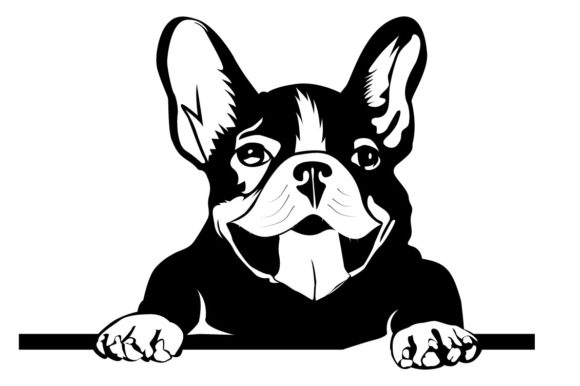
Dog SVG Vector Illustration Hand Drawing
First Impression: A Warm, Approachable Sketch That Feels Handmade
Opening Dog SVG Vector Illustration Hand Drawing for the first time, I paused—not because it’s flashy, but because it’s quietly confident. It reads like a quick, affectionate sketch: soft line weight, gentle curves, no harsh angles or over-rendered details. There’s no photorealism here, and that’s its strength. As an embroidery designer who regularly translates vector art into stitch files, I immediately saw how this would translate to thread—especially on natural fabrics like cotton canvas, linen tea towels, or baby onesies. It doesn’t scream “look at me,” but it invites touch, attention, and quiet recognition. That makes it ideal for boutique merchandise, personalized gifts, and small-batch apparel where authenticity matters more than polish.
Real-World Use: From Tote Bag to Nursery Decor
Last week, I prepped a custom embroidered tote for a local pet rescue’s fundraiser—cotton canvas, medium-weight, 4” × 4” hoop. I used Dog SVG Vector Illustration Hand Drawing as the core motif, resized to 3.2”, and digitized it with a balanced mix of satin stitch for the outline and light fill stitch for subtle body definition. The result? Clean, legible, and undeniably warm. Customers didn’t just see a dog—they saw *their* dog. That emotional resonance is rare in generic graphics, and it’s why this design works so well for Etsy sellers building brand trust through handmade storytelling.
I also tested it on a lightweight organic cotton baby blanket (using tear-away + cutaway stabilizer combo). Because the original vector has open negative space and minimal interior detail, stitching stayed breathable and soft—no stiff, dense patches that overwhelm delicate fabric. That’s critical for baby embroidery, where comfort and safety are non-negotiable. On sweatshirts? It held up beautifully at 3.5” with a slightly heavier satin stitch outline—enough definition to read clearly, but not so bold it competes with the garment’s texture.
Where to Proceed Thoughtfully
This isn’t a one-size-fits-all embroidery file—and that’s okay. Dog SVG Vector Illustration Hand Drawing shines brightest when matched to the right context. Avoid cramming it into tiny hoops (<3”) unless you’re willing to simplify outlines manually; fine line work can blur or stitch inconsistently on small scales. On stretchy knits (like t-shirts), use a light cutaway stabilizer and reduce stitch density slightly—those smooth, continuous curves rely on stable fabric movement.
Dark fabrics demand careful thread selection: a medium-gray or charcoal thread preserves the hand-drawn feel better than stark white, which can look clinical. On textured surfaces—like woven aprons or burlap kitchen towels—keep the size generous (≥3”) so the shape remains legible amid the grain. And while it’s lovely on curved surfaces like caps, avoid placing it near the bill seam or crown peak unless you’ve tested placement on your specific cap frame—vector flow doesn’t always predict stitch behavior on compound curves.
What This Design Adds to Your Finished Product
- Visual appeal: Its sketch-like simplicity reads as intentional, not unfinished—elevating handmade product perception without requiring advanced digitizing skills.
- Customer trust: Buyers recognize sincerity in restrained design. This isn’t clipart—it feels curated, personal, and gift-ready.
- Brand consistency: Works seamlessly across categories—tote bag, tea towel, baby onesie—without visual whiplash. That cohesion helps small shop owners build recognizable product lines.
- Giftability: Paired with a handwritten note or simple packaging, it reads as thoughtful, not mass-produced. Perfect for holiday embroidery or wedding favors (think: “Best Dog Mom” tote + matching pillow cover).
Practical Embroidery Designer Notes
Before cutting or stitching, treat Dog SVG Vector Illustration Hand Drawing like any new design asset—not as a finished embroidery file, but as raw material. Here’s what I do every time:
- Test on scrap fabric matching your final substrate—same weight, weave, and stretch.
- Check thread color contrast in both natural and artificial light; soft grays or oatmeals often outperform pure black or white on natural fibers.
- Review stitch density in your digitizing software—this vector’s openness means fill areas shouldn’t need heavy coverage, but don’t skip density checks on curved sections.
- Confirm hoop size compatibility—some versions may require minor scaling to fit standard 4” or 5” hoops without distortion.
- Inspect corners and inner curves for potential thread nesting; smooth vectors like this usually behave well, but always verify.
- Preview in black-and-white mockups—this design relies on shape and rhythm, not shading, so monochrome testing reveals clarity issues fast.
- Compare performance on light vs. dark fabric backgrounds using printable mockups before listing on Etsy or launching a craft fair batch.
- Use appropriate stabilizer: tear-away for stable wovens, cutaway for knits or high-wear items like aprons or tote straps.
- Verify licensing terms—since this is categorized under Print Templates and Graphics, confirm whether commercial embroidery rights are included before selling finished embroidered goods or bundling into digital embroidery kits.
A Design That Serves the Maker—and the Market
Dog SVG Vector Illustration Hand Drawing doesn’t try to be everything. It’s not a complex applique design with layered fabrics, nor a dense fill-stitch portrait demanding premium thread counts. It’s a focused, human-scale graphic—designed to support, not overshadow, the handmade product it lives on. For craft business owners juggling client deadlines, Etsy SEO, and real-world wear testing, that focus is invaluable. It saves digitizing time, reduces customer returns due to unclear stitching, and consistently delivers that “just right” handmade impression customers pay extra for.
Whether you’re embroidering a single holiday gift or scaling production for a boutique wholesale order, this design earns its place in your library—not because it’s trendy, but because it’s trustworthy, adaptable, and quietly professional. That’s the kind of asset that grows with your business, not one you replace every season.