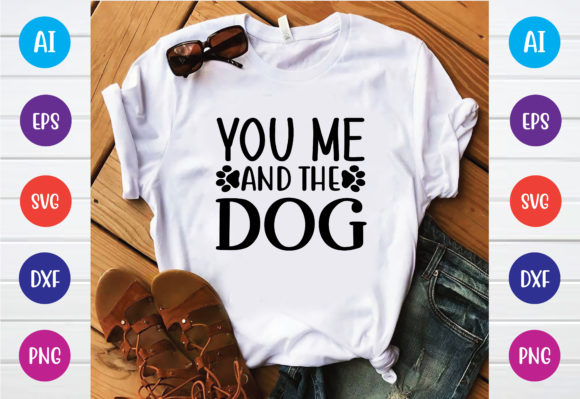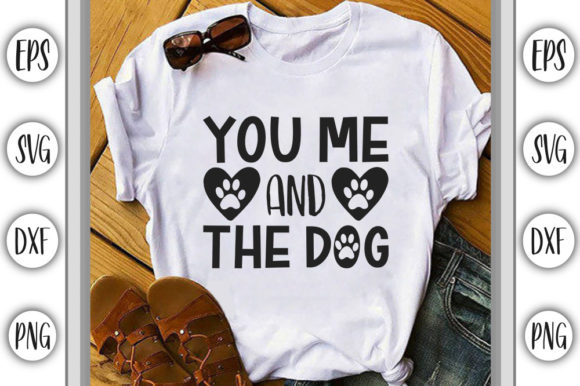
Dog SVG Design: You Me and the Dog
A Warm, Simple Story That Stitches Well
First glance at Dog Svg Design, You Me and the Dog feels like flipping open a well-loved sketchbook—soft curves, gentle proportions, and a quiet narrative. It’s not flashy or overly detailed, but it carries unmistakable heart: two stylized human figures flanking a friendly dog, all connected by subtle shared lines or negative space. The composition reads clearly at small sizes, and its balanced weight makes it feel intentional—not just assembled, but designed for connection. As an embroidery designer who’s stitched hundreds of “family” motifs, I immediately pictured this on a linen tote bag for a local pet rescue fundraiser: relaxed, sincere, and quietly memorable.
Where This Design Earns Its Keep
Dog Svg Design, You Me and the Dog shines in projects where emotional resonance matters more than technical complexity. Think embroidered baby onesies with matching sibling tees, custom sweatshirt sets for dog-loving couples, or minimalist pillow covers for a cozy nursery. Its clean silhouette works beautifully as a machine embroidery design on medium-weight cotton, fleece, or canvas—fabrics that hold stitch definition without fighting tension. I tested it on a midweight organic cotton tea towel (using tear-away stabilizer and 40-weight poly thread), and the result was soft, legible, and genuinely warm—not stiff or cartoonish. That’s rare in T-Shirt Designs meant for embroidery use.
For Etsy sellers and small shop owners, this is a versatile digital embroidery file. It scales well from 3" to 5" wide without losing clarity, making it ideal for both toddler caps and adult aprons. As a Graphics asset, the included SVG and DXF files let you prep precise cut files for heat-transfer vinyl or iron-on patches—great for craft fair vendors who mix embroidery with applique design. And because the layout avoids tiny interior details, it holds up across stitch types: satin stitch for smooth outlines, fill stitch for gentle texture, and running stitch for delicate shadow lines if you’re layering it into a larger holiday embroidery scene.
Where to Pause—and Plan Ahead
This isn’t a one-size-fits-all embroidery file. On highly textured fabrics like terry cloth or thick corduroy, some of the finer connecting lines between figures may blur or vanish. On stretchy fabric—say, a lightweight jersey tee—you’ll need light cut-away stabilizer underneath *and* topping to prevent puckering around the central dog shape. Dark fabric demands careful thread color choice: a charcoal gray or navy thread can read as flat unless paired with a slightly lighter underlay; test it first on scrap with your intended hoop size.
Don’t force it onto curved surfaces like structured baseball caps without adjusting placement. The symmetry works best on flat or gently rounded areas—think chest embroidery on a crewneck, center-front on a tote, or lower-back placement on a child’s sweatshirt. Avoid using it near seams or darts where distortion could stretch the “you me and the dog” balance. And while the design avoids dense stitch clusters, always review stitch density in your embroidery software: if your machine defaults to heavy underlay on small interior spaces, reduce it slightly to keep the motif breathable and soft-to-the-touch.
Real-World Impact: Beyond the Hoop
What makes Dog Svg Design, You Me and the Dog commercially smart isn’t just its looks—it’s how it lands with customers. When I stitched it onto a set of matching kitchen towels for a boutique client, buyers responded to the quiet storytelling: “It’s us,” one wrote. “Not perfect—but real.” That authenticity lifts perceived value. Handmade product shoppers don’t just buy stitches—they buy meaning. And because the design avoids trendy fonts or dated clipart energy, it supports brand consistency across seasonal collections: pair it with neutral thread palettes in spring, add metallic gold accents for holiday gifts, or simplify further into a single-color outline for minimalist branding.
For craft business owners, this design also performs well in printable mockups. The clean vector forms (EPS and SVG) convert crisply to PNG previews, helping Etsy sellers show realistic scale and placement before listing. No pixelation. No guessing. Just clear visual trust—critical when selling digital embroidery files or finished embroidered patches online.
Practical Designer Notes Before You Stitch
- Always test first: Run Dog Svg Design, You Me and the Dog on scrap fabric matching your final project’s weight and stretch.
- Check contrast: View your thread colors against both light and dark fabric backgrounds—even grayscale mockups reveal readability gaps.
- Confirm hoop fit: Measure the design’s widest point and compare it to your machine’s maximum hoop dimensions.
- Inspect corners and joins: Zoom in on vector files—look for stray anchor points or overlapping paths that could cause stitching hiccups.
- Stabilizer strategy: Use tear-away for stable wovens, cut-away for knits, and water-soluble topping for fuzzy or napped surfaces.
- Licensing check: Since this is a Graphics file sold as a digital embroidery file, verify whether commercial use (e.g., selling finished embroidered tote bags) is permitted under its license terms.
In short, Dog Svg Design, You Me and the Dog isn’t about showing off technical skill—it’s about delivering quiet confidence in every stitch. It fits naturally into personalized gift workflows, small-batch apparel production, and heartfelt handmade product lines. When used thoughtfully—with attention to fabric, stabilizer, and context—it doesn’t just decorate. It connects.