Dog SVG Design, You Can Always Find
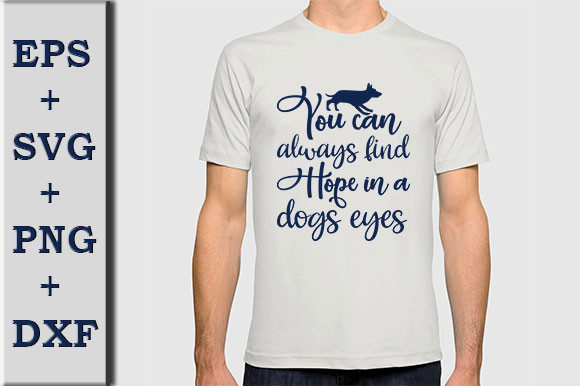
As someone who’s stitched hundreds of designs across apparel, home goods, and personalized gifts—from boutique baby onesies to Etsy best-selling tote bags—I opened Dog SVG Design, You Can Always Find expecting warmth. What I got was something quieter but more resonant: a gentle, soulful silhouette paired with thoughtful typography that lands like a quiet truth, not a slogan. This isn’t a flashy dog portrait or cartoon mascot. It’s a soft-lined outline of a seated dog in profile, eyes gently lifted, paired with the phrase *“You can always find hope in a dog’s eyes”* rendered in clean, legible script. The balance between figure and text feels intentional—not crowded, not sparse—and immediately signals where it belongs: on a linen tea towel for a vet clinic gift shop, an organic cotton sweatshirt for a rescue nonprofit, or a small embroidered patch sewn onto a child’s backpack.
First Stitch, First Impression
Before loading it into my embroidery software, I studied the vector files—SVG, EPS, DXF, PNG—all cleanly layered and well-named. No stray anchor points, no overlapping paths, no hidden layers. That matters. A messy vector file becomes a stitch nightmare: jagged satin stitches, inconsistent fill density, or letters that collapse under thread tension. Here, the curves are smooth, the negative space around the dog’s ear and muzzle is generous, and the script font has open counters and consistent stroke weight—exactly what you need for legibility at 3–4 inches wide. I ran a quick test on medium-weight cotton twill with tear-away stabilizer: the design stitched cleanly at ~3.5" wide, with crisp edges and no puckering. The phrase stayed readable—even at 2.75", though I’d recommend 3" minimum for any garment application where clarity matters.
Where It Shines (and Where It Asks for Care)
Dog SVG Design, You Can Always Find excels in projects where emotional resonance outweighs visual complexity. Think: a cream-colored apron for a pet-friendly bakery, a navy sweatshirt for a shelter volunteer team, or a pale gray baby blanket with delicate pink thread. It reads as handmade—not mass-produced—because the line work breathes, and the sentiment lands without shouting.
It works beautifully for:
- Embroidered patches — Clean outlines translate well to merrowed or heat-seal backing; minimal fill means low stitch count and flexible drape.
- Tote bag design — Centered on the front panel, it adds quiet character without overwhelming canvas texture.
- Baby embroidery — On a onesie or burp cloth, the soft shape and hopeful message feel tender, not cutesy.
- Holiday embroidery — Paired with subtle gold thread on charcoal flannel, it reads as meaningful, not seasonal.
- Commercial embroidery — Small shops and rescue orgs appreciate its dignity; it supports brand voice without demanding custom digitizing.
But here’s where attention pays off: avoid using it full-size on stretchy fabric (like ribbed knits) without cut-away stabilizer underneath—the script can distort. On dark fabric, test white or light ecru thread first; some fonts lose subtlety if contrast dips below 80%. And while the design fits standard 4x4 hoops comfortably, don’t push it into a 3x3 unless you’re willing to simplify the text manually—it’s tight, and tiny serifs may vanish in fill stitch.
What It Does for Your Craft Business
If you’re an Etsy seller or small shop owner, Dog SVG Design, You Can Always Find isn’t just another graphic—it’s a trust-builder. Customers scrolling for “meaningful pet gifts” or “calm embroidery designs” pause here. Why? Because it avoids cliché. No paw prints. No bold all-caps. Just honesty, rendered with restraint. That translates directly to perceived value: buyers pay more for pieces that feel considered, not curated from a clipart pack.
For digital product sellers, this design holds up in printable mockups—especially lifestyle shots on natural textiles. Its grayscale-friendly contrast means your product photos stay cohesive whether shown on oatmeal linen or slate-gray fleece. And because the ZIP includes SVG, EPS, and DXF, it bridges craft and commercial workflows: laser-cutters, Cricut users, and embroidery digitizers can all start from the same clean source.
Practical Designer Notes Before You Stitch
You’ll get better results—and fewer re-stitches—if you do these five things first:
- Test on scrap fabric matching your final project’s weight and stretch. Even with great vectors, fabric behavior changes everything.
- Check thread color contrast in natural light—not just on screen. That “soft gray” thread might disappear on heather charcoal.
- Review stitch density in your embroidery software. If fill areas look overly dense (especially around the dog’s chest), reduce density by 5–10% to prevent stiffness.
- Confirm hoop size and placement—this design benefits from centered, slightly lower-than-center positioning on garments (think upper back of a sweatshirt, not dead center chest).
- Verify licensing before selling finished items or reselling the digital file. The listing says it’s a Graphics file in the T-Shirt Designs category—but check included license terms for commercial use clarity.
Also worth noting: while it’s labeled a T-Shirt Designs asset, its real strength lies beyond t-shirts. It’s too tender for heavy-duty screen printing, but just right for slow-stitch craftsmanship—embroidered pillow covers, hand-stitched tea towels, or limited-run nursery decor. It rewards patience and precision, not speed.
A Design That Earns Its Place
In a market flooded with busy, over-digitized dog motifs, Dog SVG Design, You Can Always Find stands out by doing less—and meaning more. It doesn’t demand attention; it invites reflection. That makes it ideal for makers who build businesses on authenticity: rescue nonprofits launching merch lines, therapists offering pet-assisted wellness kits, or grandparents stitching heirloom-quality baby gifts. It’s not background noise. It’s the quiet line on the tag that makes someone pause, smile, and say, “Yes—that’s exactly how I feel.”
Use it thoughtfully. Test it deliberately. Let its calm confidence speak through your stitch work—and watch how often customers ask, “Where did you find that?”