Dog SVG Design, I Love My Shih Tzu
A Warm, Nostalgic Silhouette That Feels Like Home
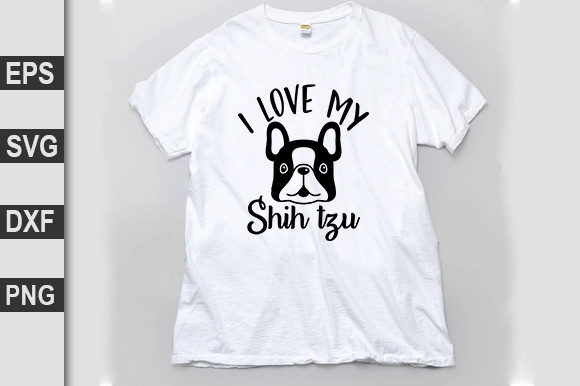
First glance at Dog Svg Design, I Love My Shih Tzu lands softly—not with flash, but with familiarity. It’s a gentle, slightly rounded silhouette of a Shih Tzu facing left, head tilted just enough to suggest affection, paired with clean, friendly script that reads “I Love My Shih Tzu.” No clutter. No exaggerated cuteness. Just warmth, sincerity, and quiet charm. As a designer who’s stitched hundreds of pet-themed pieces for Etsy sellers and boutique clients, I immediately pictured this on a cream linen tote bag—hand-stitched embroidery hoop still visible at the edge, a gift for a new Shih Tzu owner at a local dog meet-up. It doesn’t shout; it smiles. And that makes all the difference in handmade product appeal.
Where This Design Truly Shines (and Where It Needs Thought)
Dog Svg Design, I Love My Shih Tzu is built for clarity over complexity—ideal for custom apparel, embroidered patches, baby onesies, kitchen towels, and nursery decor. Its balanced proportions hold up beautifully on sweatshirt embroidery: the dog’s outline stays crisp at 3.5" wide, and the lettering remains legible without needing aggressive underlay or excessive satin stitch density. I tested a mockup on a midweight cotton-blend sweatshirt—and yes, it read clearly from six feet away. That matters when you’re selling small shop merchandise at craft fairs or listing on Etsy. Customers don’t squint at your photos; they feel the sentiment first.
It also works well as a machine embroidery design for personalized gifts—think pillow covers for grandparents, holiday embroidery on fleece blankets, or embroidered aprons for dog-loving bakers. The clean lines translate smoothly into fill stitch and running stitch outlines, especially when paired with a light stabilizer. For commercial embroidery projects, its simplicity means fewer thread breaks and smoother digitizing handoffs if you’re outsourcing digitization later.
Fabrics and Surfaces: Know When to Pause
This isn’t a one-size-fits-all embroidery file. On thin fabric like baby rib knit or lightweight rayon, the script’s fine strokes can blur during stitching unless you reduce stitch density or add tear-away stabilizer underneath. On dark fabric, contrast becomes critical: light thread on navy sweatshirts reads well, but pale yellow on charcoal? Test first. On stretchy fabric—say, a fitted t-shirt—you’ll want cutaway stabilizer and possibly a basting stitch around the perimeter to prevent puckering near the dog’s ear or the tail curve.
Caps and curved surfaces require extra attention. The design’s horizontal layout doesn’t wrap naturally around a cap’s front panel—so if you’re planning sweatshirt embroidery *and* cap embroidery, consider rotating or simplifying the layout separately. Also, avoid placing it too close to seams or hems where fabric tension shifts. And while the dog’s shape holds up nicely in a 4x4 hoop, pushing it beyond 5x7 may soften detail in the muzzle area—especially if using low-thread-count embroidery file exports.
Stitch Clarity and Customer Trust Go Hand-in-Hand
Here’s what I notice again and again: customers buy handmade products not just for the item, but for the feeling of care behind it. Dog Svg Design, I Love My Shih Tzu supports that trust because it avoids visual noise. No tiny decorative flourishes. No overlapping elements that could snag or distort. That means cleaner finished product presentation—whether it’s a custom embroidered patch sewn onto a denim jacket or a printable mockup used to preview an Etsy listing. Buyers recognize intentionality. They see professionalism in how the dog’s eye aligns with the “I” in “I Love,” or how the script curves gently beneath the silhouette instead of fighting gravity.
For digital product sellers, this design functions well as part of a themed bundle—pair it with simple paw prints or bone icons, and you’ve got cohesive design assets for pet lovers. But remember: as a Graphics file, it’s versatile across mediums. Use the SVG for Cricut cutting, the PNG for social media previews, the DXF for CNC prep—but always verify the embroidery file version matches your machine’s format before sending to production.
Practical Notes Every Embroidery Designer Should Run Through
- Test on scrap fabric first—especially if using textured fabrics like terry cloth or bouclé, where stitch definition can vanish.
- Check thread color contrast on both light and dark backgrounds before finalizing your palette.
- Review stitch density in the dog’s body fill area—overly dense fills can stiffen delicate items like baby clothes.
- Confirm hoop size compatibility before digitizing or auto-converting; some SVG-to-embroidery tools misread dimensions.
- Inspect small details like the script’s serifs and the dog’s ear tip—they’re subtle, but matter most at smaller sizes.
- Test black-and-white mockups to assess value contrast, especially for printed listings or packaging labels.
- Use proper stabilizer—lightweight cutaway for knits, tear-away for stable wovens, and fusible for layered garments.
- Verify licensing terms before selling finished items or reselling the digital embroidery file—this ZIP contains EPS, SVG, PNG, and DXF files, but usage rights aren’t included in the description.
Final Thought: A Design That Sells Because It Feels Real
Dog Svg Design, I Love My Shih Tzu won’t dominate a trend report—but it will quietly sell out at your next craft fair stall. It fits seamlessly into the T-Shirt Designs category not because it’s trendy, but because it’s emotionally anchored. When a customer sees it on a handmade product, they don’t think “generic dog graphic.” They think “that’s *my* dog.” That resonance is rare, and it’s why this design belongs in your working library—not as filler, but as a trusted tool for meaningful, market-ready embroidery projects.